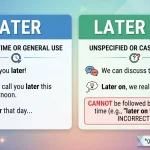

Lies Ahead vs. Lays Ahead can confuse English learners because both phrases look and sound similar, but only one describes the future correctly.
When you face a blank page, choosing between these phrases can feel tricky. Both come from different verbs, so understanding their meanings helps you avoid a common mistake. The Cambridge Dictionary defines lie ahead as something expected to happen in the future. For example, you might say, “A bright future lies ahead” or “Many challenges lie ahead.” These sentences describe future events, upcoming possibilities, or something waiting in the distance. Think of the future as a mysterious place we can never fully visit. Every second becomes the present, making time a little trippy. Although we often wonder about the unknown future, the correct phrase is usually lies ahead.
The difference becomes clearer when you understand how lie and lay work. Lie is an intransitive verb, which means it does not need a direct object. It describes a position or situation, as in “We do not know what lies ahead.” In contrast, lay is a transitive verb that normally needs an object. For example, “She lays the book on the desk” is correct because she places the book somewhere. In this sentence, she is the subject, lays is the verb, and the book is the direct object. The present forms lies and lays follow different grammar rules, even though they may seem similar at first glance.
Choosing the right phrase depends on your intended meaning and verb usage. Use lies ahead when discussing future events, a person’s future, or possibilities that have not happened yet. Use lays when someone places an object somewhere. Therefore, lays ahead is usually incorrect when you mean that something will happen in the future. Once you understand this grammatical difference, you can improve your English grammar, writing, and speaking with greater confidence. Practice these examples to remember the proper phrase, strengthen your word choice, and avoid mistakes. With a firm grasp of the rules, you will know exactly why lies ahead works and when to use it.
Let’s dive in!
Quick Answer
“Lies ahead” is the correct expression when a singular subject refers to something that awaits in the future. “Lays ahead” is generally incorrect when used with that meaning.
Here is the simplest comparison:
- Correct: A challenging journey lies ahead.
- Incorrect for the intended meaning: A challenging journey lays ahead.
- Correct in the past tense: A challenging journey lay ahead.
The difference depends on the verb’s meaning, the sentence’s tense, and its subject.
Use lies ahead when discussing something that awaits someone now. Use lie ahead with plural subjects in the present tense. Use lay ahead when describing what awaited someone from a past perspective.
For example, you might say, “Several opportunities lie ahead,” or “She wondered what lay ahead.” Both sentences are correct because each uses the appropriate verb form.
Comparison Overview
The table below summarizes the essential differences between “lies ahead” and “lays ahead.”
| Feature | Lies Ahead | Lays Ahead |
| Main verb | Lie | Lay |
| Grammatical form | Simple present, third-person singular | Simple present, third-person singular |
| Main meaning | Exists or awaits in the future | Places or puts something |
| Requires a direct object | No | Normally yes |
| Correct for upcoming events | Yes | No, not in the intended idiom |
| Example | A bright future lies ahead. | She lays the book on the desk. |
| Common mistake | Confusing it with lays | Using it to mean something awaits |
The central difference is that lie can describe something that exists or awaits, while lay generally means to put something somewhere.
Remember that “lay ahead” is also correct when used as the past tense of “lie ahead.” For example, “A difficult decision lay ahead of them.” This distinction matters because the correct form depends on both meaning and tense, not just the words surrounding ahead.
Main Differences Between “Lies Ahead” vs. “Lays Ahead”
Although the phrases differ by only one letter, they serve different grammatical purposes. The easiest way to understand them is to examine the verbs themselves.
Meaning and Usage
“Lies ahead” describes something that exists in the future or awaits someone. It often refers to opportunities, challenges, decisions, experiences, or events that haven’t happened yet.
Examples include:
- A promising career lies ahead of her.
- Several difficult decisions lie ahead.
- Nobody knows what lies ahead for the company.
In each sentence, lies connects the subject with something expected or waiting in the future.
“Lays ahead” doesn’t normally carry this meaning in standard English. The verb lays generally describes placing something somewhere or preparing something for a particular purpose.
For example:
- She lays the papers on the table.
- The company lays the groundwork for expansion.
- He lays the foundation for a successful career.
Notice that each sentence contains an object receiving the action. She lays the papers, the company lays the groundwork, and he lays the foundation.
Verb Forms and Subject Agreement
Subject-verb agreement also determines whether you should use lies or lie.
| Subject | Correct expression | Example |
| The opportunity | Lies ahead | A great opportunity lies ahead. |
| The opportunities | Lie ahead | Several opportunities lie ahead. |
| The challenge | Lies ahead | A difficult challenge lies ahead. |
| The challenges | Lie ahead | Many challenges lie ahead. |
| I | Lie ahead | Few easy options lie ahead for me. |
| We | Lie ahead | Several important tasks lie ahead for us. |
The last two examples use lie ahead because the grammatical subject isn’t third-person singular. The phrase doesn’t change merely because the sentence mentions one person.
Present Tense Versus Past Tense
Tense creates another important distinction.
Use lies ahead when describing what awaits someone from the present perspective. Use lay ahead when describing what awaited someone at an earlier point in time.
Compare these examples:
- Present: A difficult year lies ahead for the team.
- Past: A difficult year lay ahead for the team.
- Present: She doesn’t know what lies ahead.
- Past: She didn’t know what lay ahead.
Both versions can describe future events. The difference is the viewpoint from which the speaker describes them.
By contrast, lays ahead isn’t the standard present-tense alternative to lies ahead.
What Does “Lies Ahead” Mean?
The expression “lies ahead” means that something is waiting in the future, exists farther along a path, or remains to be experienced. It can describe a literal location or an upcoming event.
For instance, a sign might point toward a road that lies ahead. In another sentence, a writer might say that new opportunities lie ahead after graduation.
The expression works especially well when the future feels uncertain, important, exciting, or challenging.
Definition of “Lies Ahead”
The phrase combines the verb lies with the adverb ahead.
Here, lies is the third-person singular present form of lie. The word ahead indicates a position farther forward or a point in the future.
Together, the words express the idea that something is waiting or remains to come.
Consider these examples:
- A long road lies ahead of the hikers.
- A new chapter lies ahead after graduation.
- Many changes lie ahead for the organization.
The first sentence can describe a physical road. The other sentences use the phrase figuratively to describe future experiences.
Importantly, lies in this expression has nothing to do with telling an untruth. The noun and verb forms of lie have different meanings, but the surrounding words make the intended meaning clear.
When Should You Use “Lies Ahead”?
Use “lies ahead” when the subject is singular and you want to describe something awaiting someone in the future.
Common situations include:
- Career development: A rewarding career lies ahead for the young engineer.
- Education: A busy semester lies ahead for the students.
- Personal decisions: An important choice lies ahead of us.
- Business planning: A period of rapid growth lies ahead for the company.
- Travel: A winding mountain road lies ahead.
- Personal growth: A new chapter lies ahead after this difficult experience.
The phrase often creates a sense of anticipation. It can suggest hope, uncertainty, preparation, or even concern.
For example, “A difficult conversation lies ahead” communicates more than the simple statement “A difficult conversation is coming.” It gives the upcoming event a sense of importance.
“Lies Ahead” in Everyday Writing
You can use this expression in casual conversations, formal writing, essays, and professional communications.
In everyday conversation, someone might say:
Nobody knows what lies ahead, so let’s focus on today.
In a business report, a writer might say:
A period of significant change lies ahead for the organization.
In an academic essay, the phrase might introduce an upcoming challenge:
Several questions lie ahead for researchers studying this issue.
However, don’t force the expression into every sentence about the future. Words such as awaits, is coming, will happen, and is approaching may sound more natural in certain contexts.
The goal is to choose the phrase that communicates your meaning clearly.
What Does “Lays Ahead” Mean?
Unlike “lies ahead,” the phrase “lays ahead” doesn’t normally mean that something awaits someone in the future.
The confusion comes from the relationship between lie and lay. These verbs have different meanings, although their forms overlap in ways that confuse many English learners.
Definition of “Lays”
Lays is the simple present form of lay used with third-person singular subjects such as he, she, it, or a singular noun.
The verb lay usually means to put, place, or set something down. It normally takes a direct object.
For example:
- She lays her phone beside the computer.
- The worker lays the bricks carefully.
- He lays the documents on his manager’s desk.
- The organization lays the groundwork for future projects.
Ask yourself, “What does the person lay?” The answer identifies the direct object.
She lays her phone. The worker lays the bricks. He lays the documents.
This object requirement provides a useful clue when you’re deciding between lie and lay.
Why Is “Lays Ahead” Usually Incorrect?
When you want to describe something that awaits someone, the expression requires the appropriate form of lie, not lay.
Consider this sentence:
Incorrect: A bright future lays ahead of her.
Correct: A bright future lies ahead of her.
The subject, a bright future, isn’t placing anything somewhere. Instead, the sentence describes what awaits the person.
Here are more examples:
| Incorrect wording | Correct wording |
| A major challenge lays ahead. | A major challenge lies ahead. |
| We don’t know what lays ahead. | We don’t know what lies ahead. |
| An exciting adventure lays ahead of them. | An exciting adventure lies ahead of them. |
| A difficult decision lays ahead for the team. | A difficult decision lies ahead for the team. |
In every example, the correction uses lies because the intended meaning concerns the future.
Still, don’t conclude that the words lays ahead can never appear together. A sentence may use lays with its normal meaning of placing something, followed by ahead as a separate indication of direction or position. The surrounding sentence determines whether that construction makes sense.
Lie vs. Lay: Understanding the Grammar Rule
If you want to avoid this mistake consistently, learn the basic difference between lie and lay. Their definitions explain why one fits the expression and the other doesn’t.
“Lie” as an Intransitive Verb
The verb lie can mean to rest, remain in a position, or exist in a particular place. In the expression lie ahead, it describes something that awaits or exists in the future.
An intransitive verb doesn’t require a direct object to complete its basic meaning.
Examples include:
- The cat lies on the sofa.
- The village lies beyond the river.
- Several opportunities lie ahead.
- Important questions lie ahead for the research team.
Notice that none of these sentences requires an object receiving the verb’s action.
In “Several opportunities lie ahead,” the opportunities aren’t placing anything. They simply await the people who may encounter them.
That’s why lie ahead works naturally in this context.
“Lay” as a Transitive Verb
The verb lay means to put or place something. A transitive verb normally acts on a direct object.
Examples include:
- She lays the blanket on the bed.
- He lays the cards on the table.
- The builders lay the bricks in straight rows.
- The committee lays the groundwork for a new policy.
Each sentence identifies what someone places or prepares.
A quick test can help: after the verb lay, ask “What?”
- She lays what? The blanket.
- He lays what? The cards.
- The committee lays what? The groundwork.
This test won’t solve every grammatical question, but it helps distinguish the ordinary uses of these verbs.
Why the Past Tense Causes Confusion
Here’s where English becomes tricky: “Lay” is the simple past tense of “lie.” However, laid is the past tense of lay.
The verbs therefore have different forms despite their similar meanings in certain contexts.
| Verb | Present tense | Simple past | Past participle |
| Lie, meaning rest or exist | Lie / lies | Lay | Lain |
| Lay, meaning put or place | Lay / lays | Laid | Laid |
Let’s examine the difference in actual sentences.
- Present: A difficult decision lies ahead.
- Past: A difficult decision lay ahead.
- Present: She lays the book on the table.
- Past: She laid the book on the table.
- Present perfect: The book has lain on the table for hours.
- Present perfect with lay: She has laid the book on the table.
The last two examples demonstrate why verb meaning matters. Lain belongs to the verb lie, while laid belongs to the verb lay.
You don’t need to memorize every possible form immediately. Start by recognizing the most common patterns in sentences you actually write.
Is “Lay Ahead” Ever Correct?
Yes. “Lay ahead” is grammatically correct when you use it as the past tense of “lie ahead.”
This distinction is one of the most important parts of the entire comparison. A sentence can describe a future event from the perspective of someone who lived in the past.
Using “Lay Ahead” in Past-Tense Sentences
Imagine a student looking back on the final year of high school. At the time, the student faced many uncertain experiences.
You might write:
She had no idea what lay ahead after graduation.
The phrase lay ahead describes what awaited her at that earlier point in time. The events themselves occurred later, but the sentence uses a past viewpoint.
More examples include:
- They didn’t realize how many challenges lay ahead.
- A difficult conversation lay ahead of him.
- She wondered what opportunities lay ahead after college.
- At the beginning of the year, several major changes lay ahead for the company.
These sentences are grammatically correct because lay functions as the past tense of lie.
“Lay Ahead” vs. “Lies Ahead”
The difference becomes clearer when you compare sentences that describe the same situation from different viewpoints.
| Present perspective | Past perspective |
| A new adventure lies ahead. | A new adventure lay ahead. |
| Several challenges lie ahead. | Several challenges lay ahead. |
| She wonders what lies ahead. | She wondered what lay ahead. |
| We don’t know what lies ahead. | We didn’t know what lay ahead. |
The event doesn’t need to have happened when the narrator uses lay ahead. The expression simply places the description within a past narrative.
For example, “In 2020, the company faced many changes that lay ahead” describes changes awaiting the company from that historical viewpoint.
Therefore, the rule isn’t “always use lies when discussing the future.” Instead, choose the verb form that matches the subject and the intended tense.
Correct and Incorrect Examples of “Lies Ahead” and “Lays Ahead”
Examples make grammar rules easier to apply because they show how the words work in context.
The following sentences illustrate common mistakes and their corrections.
| Incorrect or intended wording | Correct sentence | Why it works |
| A bright future lays ahead. | A bright future lies ahead. | The expression uses lie to describe the future. |
| We don’t know what lays ahead. | We don’t know what lies ahead. | The present-tense expression takes lies. |
| Many challenges lays ahead. | Many challenges lie ahead. | A plural subject takes lie. |
| She wondered what lies ahead. | She wondered what lay ahead. | Lay matches the past narrative perspective. |
| The opportunity lay ahead of us today. | The opportunity lies ahead of us today. | The present-time context calls for lies. |
| She lays ahead for the journey. | She lays the supplies out ahead of the journey. | Lays needs an object in its ordinary placing sense, and the sentence needs a clear structure. |
The fifth example needs a little context. If the writer describes what awaits the group now, lies ahead is the natural choice. If the writer describes what awaited them at a particular point in the past, lay ahead may be appropriate.
Now compare some correct uses of lays:
- She lays the clothes out before packing.
- He lays the groundwork for the negotiations.
- The farmer lays the tools beside the barn.
- The hen lays an egg every morning.
These examples use lays with its ordinary meaning. None uses it as a substitute for lies ahead.
How to Correct the Mistake in Your Own Writing
When you encounter “lays ahead,” follow these steps:
- Identify the subject. Determine what lies ahead, such as a challenge, opportunity, or decision.
- Check the intended meaning. Ask whether the sentence describes something awaiting someone or something being placed.
- Choose the tense. Use lies for a singular present-tense subject, lie for plural subjects in the present, or lay for the past.
- Read the sentence aloud. Check whether the wording communicates the intended meaning naturally.
This quick process can help you catch the error before publishing an article, sending an email, or submitting an assignment.
Examples of “Lies Ahead” in Different Contexts
The phrase appears in many situations because people often talk about future possibilities. Here are examples showing how it works across different subjects.
Career and Education
Career and educational milestones often involve uncertainty, which makes lies ahead a natural choice.
- A rewarding career lies ahead for the new graduate.
- A demanding semester lies ahead for the students.
- Several important exams lie ahead this spring.
- New opportunities lie ahead after completing the certification.
Use lie ahead when the subject is plural:
- Many career opportunities lie ahead for qualified candidates.
- Several academic challenges lie ahead for the class.
Personal Life and Relationships
Personal decisions often shape how people describe their future.
- An important decision lies ahead for the couple.
- A fresh start lies ahead after the move.
- Nobody knows what lies ahead in their relationship.
- A difficult conversation lies ahead for the family.
The expression can create anticipation without revealing exactly what will happen. It works particularly well when the outcome remains uncertain.
Business and Work
Professional writing often uses this phrase to describe upcoming responsibilities, risks, and plans.
- A busy quarter lies ahead for the sales team.
- Several major deadlines lie ahead this month.
- A period of growth lies ahead for the business.
- Important negotiations lie ahead for the company.
For a report, use the singular or plural form that matches the subject. For example, “A major deadline lies ahead” differs from “Several major deadlines lie ahead.”
Travel and Adventure
The phrase also works literally when describing a route or figuratively when discussing an experience.
- A winding mountain road lies ahead.
- A long journey lies ahead for the hikers.
- An exciting adventure lies ahead for the group.
- Several miles of rough terrain lie ahead.
These examples demonstrate how ahead can refer to physical distance or upcoming experiences.
Common Mistakes to Avoid
Even writers who understand the basic rule sometimes confuse these forms. Watch for the following errors when editing your work.
Using “Lays” Instead of “Lies”
This is the central mistake in the comparison.
Incorrect: A bright future lays ahead.
Correct: A bright future lies ahead.
The sentence describes a future possibility rather than an act of placing something. Therefore, lies is the appropriate verb.
Ignoring Subject-Verb Agreement
The verb must agree with its subject in the simple present tense.
- Singular: A challenge lies ahead.
- Plural: Several challenges lie ahead.
- Singular: An opportunity lies ahead.
- Plural: Many opportunities lie ahead.
Don’t let the word ahead distract you from identifying the subject. The subject determines whether the present-tense verb should be lie or lies.
Confusing “Lay” With “Laid”
Remember that lay is the past tense of lie, while laid is the past tense of lay.
Compare:
- A challenge lies ahead today.
- A challenge lay ahead last year.
- She lays the folder on the desk.
- She laid the folder on the desk yesterday.
These differences become easier to remember when you learn the verbs through complete sentences rather than isolated forms.
Assuming “Lay Ahead” Is Always Wrong
This assumption creates another error.
Correct: He didn’t know what lay ahead.
The sentence uses lay to describe what awaited him from a past perspective. Replacing it automatically with lies would change the tense and potentially disrupt the surrounding sentence.
Choosing a Phrase Without Checking Its Meaning
Before choosing lie or lay, ask what the sentence actually describes.
If someone places an object somewhere, lay is usually appropriate. If something exists or awaits in the future, lie ahead is the appropriate expression.
This distinction helps you avoid relying on how a phrase sounds instead of how it functions.
How to Remember the Difference
A simple memory trick can help you choose the correct phrase without revisiting the entire grammar rule every time.
Use the “Place Something” Test
If someone places something somewhere, think of lay.
For example:
- She lays the keys on the counter.
- He lays the papers beside the computer.
- The workers lay the bricks along the path.
Ask yourself, “What is being placed?” If the sentence has a clear object receiving the action, lay may be the right verb.
Remember that the correct form still depends on tense. For example, “She laid the keys on the counter” uses the past tense.
Use the “Future or Upcoming” Test
If the sentence describes something waiting in the future, think of lie ahead.
Examples:
- A promising opportunity lies ahead.
- Several important decisions lie ahead.
- A challenging season lies ahead for the team.
Then check the subject and tense:
- Present, singular: A challenge lies ahead.
- Present, plural: Several challenges lie ahead.
- Past: A challenge lay ahead.
This three-part pattern covers many common situations.
Check the Subject Before Choosing the Verb
The subject determines whether you need lies or lie in the present tense.
Try these examples:
- The road lies ahead.
- The roads lie ahead.
- Her next challenge lies ahead.
- Her next challenges lie ahead.
Although the meaning stays similar, the verb changes to match the subject.
When in doubt, identify the subject first. Then choose the appropriate verb form.
“Lies Ahead” vs. “Lays Ahead” vs. “Lay Ahead”
These three expressions deserve a final comparison because their similar spellings can create confusion.
| Phrase | Correct use | Example |
| Lies ahead | Present tense with a singular third-person subject | A new chapter lies ahead. |
| Lie ahead | Present tense with a plural or other non-third-person-singular subject | Many opportunities lie ahead. |
| Lay ahead | Past tense of lie ahead | A new chapter lay ahead of her. |
| Lays ahead | Generally incorrect for the intended future meaning | Write “A new chapter lies ahead” instead. |
The most important point is that “lies ahead” and “lay ahead” can both be correct. They differ in tense and perspective. “Lays ahead” doesn’t normally replace either form when you’re describing something that awaits someone.
FAQs:
What is the difference between lies ahead and lays ahead?
Lies ahead refers to something expected to happen in the future. Lays ahead is usually incorrect when used with this meaning because lay normally requires a direct object.
Is lies ahead grammatically correct?
Yes, lies ahead is grammatically correct when the subject is singular. For example, “A bright future lies ahead.” For plural subjects, use lie ahead, as in “Many opportunities lie ahead.”
Why is lays ahead usually incorrect?
Lays is the present-tense form of lay used with he, she, or it. The verb lay normally needs a direct object, such as a book or a bag. When describing future events, lies ahead is the appropriate phrase.
What does lie ahead mean?
Lie ahead means that something is expected to happen in the future. For example, “We don’t know what lies ahead” means we don’t know what will happen next.
What is the difference between lie and lay?
Lie means to rest or remain in a position and does not need a direct object. Lay means to put something somewhere and normally requires a direct object. For example, “I lie on the bed” and “I lay the book on the table.”
Can I say many challenges lies ahead?
No. The correct sentence is “Many challenges lie ahead.” Because challenges is plural, you should use lie instead of lies. Use “A challenge lies ahead” for a singular subject.
How can I remember whether to use lies ahead or lays ahead?
Remember that lies ahead describes the future, while lays describes placing something. Think of the sentence “A new opportunity lies ahead.” If nobody is putting an object somewhere, lies ahead is usually the right choice.
Conclusion:
Understanding Lies Ahead vs. Lays Ahead becomes easier when you remember how lie and lay work. Use lies ahead for something expected in the future when the subject is singular, and use lie ahead with plural subjects. Use lays when someone places an object somewhere, as in “She lays the book on the desk.” These small grammar differences can make your English clearer and more accurate. With a little practice, you’ll be able to choose the correct phrase confidently in everyday conversations and writing.