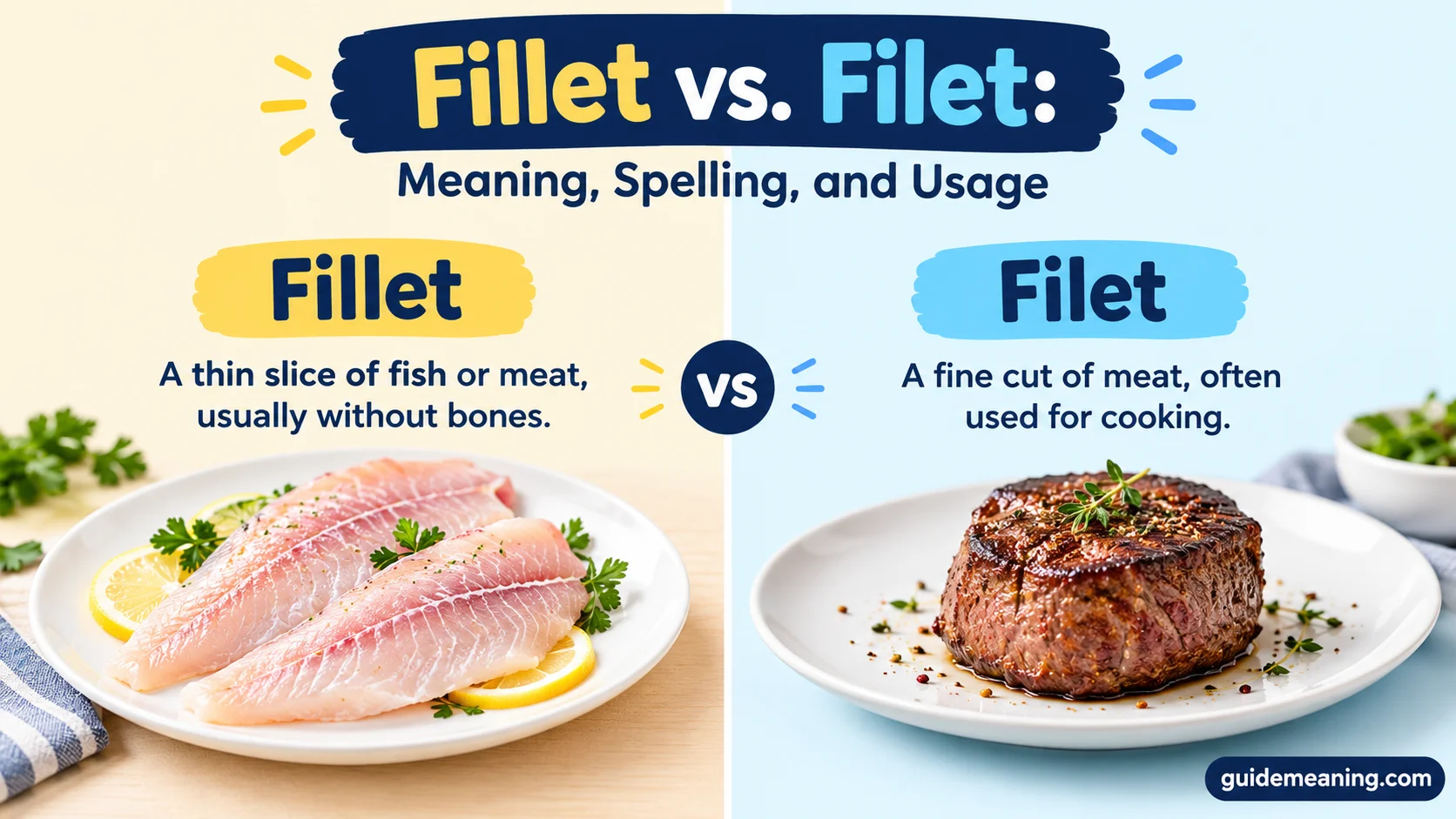

Fillet vs. Filet is a common spelling question in English when discussing food, recipes, and classic dishes because both words have nearly identical meanings and a similar sound.
Both terms describe a strip of boneless meat, including fish and other meat. Although they may dance on the tongue alike, their usage depends on the region, cuisine, setting, and writing style. In American and Canadian settings, fillet is the general term listed in dictionaries, while filet is commonly linked to French cuisine and French-derived dishes such as filet mignon. Dictionaries also list filet as an American variant, so American writers and Canadian writers can be inconsistent, even in contexts unrelated to French cuisine. These spellings have historical links to Latin, Germanic languages, and French loanwords, which can make the distinction feel fuzzier during casual conversations. Outside North America, fillet is more heavily favored, although chefs and writers may choose a spelling based on fashion, food writing traditions, or regional preferences.
With practice, you can build a better understanding of language usage, pronunciation, and culinary language. These subtle choices matter because they help people understand food, cooking technique, and culture in casual spaces and professional spaces. Learning the difference can polish your vocabulary and sharpen communication skills, whether you’re discussing a menu during service, preventing mix-ups in busy kitchens, impressing dinner guests, or preparing for a spelling bee. Although the terms may seem confusing at first, the right context makes the difference clearer and improves everyday writing.
Let’s dive in!
Quick Answer:
In American English, fillet and filet generally refer to a boneless cut of meat or fish. Fillet is especially common for fish and general food preparation, while filet often appears in American restaurant menus for beef, as in filet mignon. Both spellings are correct in appropriate contexts.
TL;DR
- Fillet is common in fish recipes and general cooking instructions.
- Filet frequently appears on American steakhouse menus.
- Both spellings describe a cut of meat or fish.
- Filet mignon is the familiar American term for a tender beef cut.
- British English generally favors fillet for the general culinary term.
- Context and established expressions help determine which spelling works best.
What Do Fillet and Filet Mean?
Both words describe a cut of meat or fish, usually one prepared without bones. However, their spelling and pronunciation can vary by region and culinary setting.
The Meaning of Fillet
A fillet is a boneless piece of meat or fish. Cooks often cut it from the side of a fish or from a particular muscle in an animal.
For example, a salmon fillet is a portion of salmon with its bones removed. A beef fillet usually refers to a tender cut of beef.
The word also has meanings outside cooking. In architecture, a fillet can describe a narrow, flat strip between decorative features.
The Meaning of Filet
Filet is a variant spelling of fillet, particularly familiar in North American English. It often appears in restaurant names for specific cuts of meat.
For example, filet mignon refers to a particularly tender cut of beef in American usage. You might also encounter filet of sole on a seafood menu.
However, filet doesn’t automatically mean a more expensive or higher-quality cut. The actual cut, its preparation, and the restaurant determine those qualities.
Fillet vs. Filet: What’s the Main Difference?
The biggest difference is spelling preference rather than the basic meaning. In the United States, both words are accepted, although certain expressions favor one form.
A Side-by-Side Comparison
| Feature | Fillet | Filet |
| Basic meaning | A boneless cut of meat or fish | The same general culinary meaning |
| Common US use | Fish, recipes, and food preparation | Beef dishes and restaurant menus |
| Pronunciation | Often FILL-it or fill-AY in US cooking | Usually fill-AY or fi-LAY |
| British English | The standard general spelling | Less common variant |
| Example | A salmon fillet | A filet mignon |
| Verb forms | Filleted, filleting | Fileted, fileting |
These differences describe common patterns, not strict boundaries. American dictionaries recognize filet as a variant of fillet, and actual usage overlaps.
Which Spelling Should You Choose?
Your choice should depend on the context and the wording your audience expects. In American writing, fillet works well for general cooking instructions, while filet fits familiar menu terms.
Consider these examples:
- The recipe calls for two salmon fillets.
- We ordered filet mignon for dinner.
- Carefully fillet the trout before cooking.
- The chef prepared a filet of beef.
Notice that the third sentence uses fillet as a verb. That spelling is especially common in American cooking instructions.
Where Did Fillet and Filet Originate?
The two spellings share a history rooted in French vocabulary. Their development shows how English adopted foreign words and adapted them for different uses.
French and Latin Roots
The English word fillet came through Old French filet, a diminutive of fil, meaning a thread. The deeper root is the Latin word filum, which also means thread.
Originally, the word described something narrow, such as a strip or band. Over time, its meaning expanded to include several kinds of narrow objects and materials.
How the Culinary Meaning Developed
By the medieval period, English used fillet for a narrow band or strip. The word later became associated with cuts of meat and fish.
One historical explanation connects the meat sense with tying meat using string during preparation. The term eventually became established in cooking vocabulary.
The spelling filet later reentered English directly from French culinary usage. This helped preserve a more distinctly French-looking form in certain food terms.
Why Both Spellings Survived
English often keeps multiple spellings when words enter through different routes. In this case, the older English form and the French-influenced variant continued side by side.
Today, neither spelling is universally superior. Instead, established expressions and regional habits influence which version people choose.
Why Do Americans Use Both Spellings?
American English includes many borrowed words that retain traces of their original languages. Fillet and filet offer a familiar example, especially in restaurants and grocery stores.
Restaurant Menus and French Influence
French cooking has influenced American restaurant vocabulary for generations. Terms such as filet mignon remain popular because they identify a recognizable dish.
The French spelling can also give a menu a traditional culinary feel. However, its use doesn’t prove that a restaurant follows French cooking methods.
Grocery Stores and Home Cooking
American grocery stores often label fish portions as fillets. Recipe writers also use fillet when explaining how to remove bones or prepare a piece of fish.
Meanwhile, filet appears frequently in the names of established dishes. As a result, shoppers and home cooks encounter both forms without needing to learn separate definitions.
Regional and Professional Preferences
Chefs, food writers, butchers, and restaurant owners may follow different house styles. A publication might prefer fillet throughout, except in established dish names.
Likewise, a restaurant may use filet for beef while selling fish fillets. These choices reflect convention rather than a fundamental difference in the food.
How Do You Pronounce Fillet and Filet?
Pronunciation is another reason these words confuse English learners and native speakers. In American English, the same spelling can have more than one accepted pronunciation.
Common American Pronunciations
The word fillet is often pronounced FILL-it when referring to a narrow band or certain nonculinary meanings. In American cooking, it can also be pronounced fill-AY.
The spelling filet is generally pronounced fill-AY or fi-LAY in the United States. The second pronunciation sounds closer to French.
British and American Differences
British English generally uses FILL-it for fillet in cooking. American English often uses fill-AY for the same word in culinary settings.
However, regional accents and individual preferences can affect pronunciation. You don’t need to imitate a French accent to pronounce an American menu term correctly.
Examples in Everyday Speech
Here are a few natural ways to use both words aloud:
- “I’ll grill a salmon fillet tonight.”
- “She ordered a filet mignon.”
- “Can you fillet this fresh trout?”
- “The menu offers a filet of beef.”
The important point is understanding the setting. In the United States, fill-AY is a familiar culinary pronunciation for both spellings.
Is Fillet or Filet Correct for Fish?
Both spellings can describe a boneless portion of fish. However, fillet is the more familiar choice in American recipes, seafood departments, and cooking instructions.
Common Fish Examples
You’ll often see fillet used with salmon, cod, tilapia, trout, and other fish. The term usually describes a portion cut lengthwise from the fish, with the bones removed.
Examples include:
- Bake the cod fillets with lemon and herbs.
- Place each salmon fillet skin-side down.
- Remove the bones before serving the fish fillets.
- Season the trout fillet with salt and pepper.
The skin may remain attached to a fish fillet. Therefore, boneless doesn’t necessarily mean skinless.
Can You Write Filet of Fish?
Yes, filet of fish is understandable and grammatically acceptable. American English recognizes filet as a variant spelling for a boneless cut of fish.
Nevertheless, fish fillet or fillet of fish will often feel more natural in general American cooking instructions. When following a recipe, use whichever form the author consistently prefers.
Is Fillet or Filet Correct for Beef?
For beef, both spellings are correct in American English. However, filet is especially familiar in restaurant menus and the names of classic steak dishes.
Filet Mignon
Filet mignon is one of the best-known examples of the French spelling in the United States. The name refers to a tender cut taken from the beef tenderloin.
The French word mignon can mean small or delicate. In American restaurants, the full expression usually identifies a small, tender beef steak.
However, the name doesn’t guarantee a particular cooking method. Restaurants may grill, broil, or pan-sear the steak according to their menus and kitchen practices.
Fillet of Beef
Fillet of beef is also correct and widely understood. This wording appears in recipes, cookbooks, and descriptions of beef prepared for roasting.
For example, a recipe might ask you to roast a beef fillet with garlic and rosemary. Another recipe could call a similar cut a beef filet.
The spelling doesn’t determine tenderness, thickness, or flavor. Those qualities depend on the cut itself and how the cook prepares it.
Fillet vs. Filet as a Verb
Both spellings can also describe the action of cutting meat or fish into boneless portions. However, American writers should pay attention to verb forms.
Using Fillet as a Verb
Fillet is a common verb in American cooking instructions. It means to cut meat or fish into fillets, often by removing the bones.
Examples include:
- The chef will fillet the fresh salmon.
- She filleted the trout before dinner.
- He’s filleting the fish for tomorrow’s meal.
The usual American forms are fillets, filleted, and filleting. Notice that the past tense doubles the final consonant.
Using Filet as a Verb
Filet can also function as a verb, especially in North American English. Its forms include filets, fileted, and fileting.
For example, you might write, “The cook fileted the fish before lunch.” This is acceptable, although filleted is a familiar alternative.
When writing for a broad American audience, consistency matters more than forcing one spelling into every sentence. If you begin with fillet, using its standard verb forms usually makes your writing easier to follow.
Common Mistakes With Fillet and Filet
Because the words overlap, many mistakes involve treating them as completely different cuts. Others come from assuming that one spelling is always incorrect.
Mistakes to Avoid
- Calling filet an incorrect spelling in every context.
- Assuming a filet must be beef rather than fish.
- Treating fillet as a word that only describes seafood.
- Assuming a boneless fillet must also be skinless.
- Using different spellings randomly within the same recipe.
These errors are easy to avoid once you understand the shared definition. Both spellings can describe boneless meat or fish, although usage patterns differ.
Choosing the Right Word in Context
When writing an American recipe, fillet is a dependable general choice. For a familiar dish such as filet mignon, preserve the established spelling.
Similarly, follow the wording used by a restaurant, publisher, or food brand when consistency matters. You don’t need to change a correct spelling simply because another version exists.
How Do Fillet and Filet Differ Around the World?
English spelling preferences vary across countries, but the underlying culinary idea remains similar. Understanding these regional patterns helps American readers interpret international recipes and menus.
British English
British English generally favors fillet as the standard spelling for meat and fish. The word commonly appears in phrases such as fish fillet and fillet steak.
The spelling filet exists in British English, but it’s generally treated as a variant. Therefore, American readers may encounter different spellings when using British cookbooks.
French and Other Languages
In French, filet is the normal spelling for a strip or cut of meat or fish. English borrowed the word from French and retained both related forms.
Other languages use their own spellings, such as Spanish filete and Italian filetto. Although these words are related, their exact usage can vary by language and culinary tradition.
A Practical International Guide
| Context | Common Spelling | Example |
| American fish recipes | Fillet | Salmon fillet |
| American steakhouse menus | Filet | Filet mignon |
| British cooking instructions | Fillet | Fillet of cod |
| French culinary writing | Filet | Filet de poisson |
| General American food writing | Either, depending on context | Beef fillet or beef filet |
These examples show common preferences rather than unbreakable rules. When reading an international menu, the surrounding description usually tells you which cut the writer means.
Does Fillet vs. Filet Change the Quality of the Food?
The spelling doesn’t tell you whether a cut tastes better, costs more, or has a different texture. Those qualities depend on the type of meat or fish, the cut, and its preparation.
Quality Depends on the Cut
A beef tenderloin steak may be tender because of the muscle it comes from. However, spelling it filet rather than fillet doesn’t make it more tender.
Fish quality also depends on factors such as freshness, handling, species, and cooking technique. A well-prepared fish fillet can taste excellent regardless of its label.
Why Filet Sometimes Sounds More Upscale
American restaurants often use French culinary terms for traditional dishes. Because filet mignon is associated with steakhouse dining, the word filet may sound more formal to some readers.
However, that association is cultural rather than a rule about food quality. A simple grilled fish fillet and an expensive filet mignon can both be excellent meals.
When Should You Use Fillet or Filet?
The easiest approach is to choose the spelling that fits your sentence. For most American writing, the following guide will help you decide quickly.
A Simple Decision Guide
Use fillet when you’re discussing fish preparation, describing a boneless portion, or writing general cooking instructions. It’s also a good choice when your audience expects British English.
Use filet when you’re writing the established dish name filet mignon or following a menu that uses this spelling. It also works as a general variant in American English.
Examples You Can Follow
| Sentence | Best Choice | Reason |
| I bought two salmon ___s. | Fillets | Common American seafood usage |
| We ordered ___ mignon. | Filet | Established dish name |
| Please ___ the trout carefully. | Fillet | Familiar cooking verb |
| The menu offers a beef ___. | Either | Both spellings are acceptable |
| The British recipe calls for cod ___. | Fillets | Standard British spelling |
You don’t have to memorize a complicated set of rules. Start with the standard expression for the dish, then use consistent spelling throughout the rest of your writing.
FAQs:
What is the difference between fillet and filet?
Fillet and filet generally mean a boneless cut of fish or meat. The main difference is spelling and regional usage. Fillet is more common in British English, while filet often appears in American English and French-inspired culinary terms.
Is fillet or filet correct in American English?
Both spellings are correct in American English. Fillet is widely used for fish and boneless cuts of meat, while filet appears in dishes such as filet mignon. Your choice may depend on the dish and preferred style.
Is filet mignon spelled with one L or two?
The standard spelling is filet mignon, with one L in filet. This French-derived name refers to a tender cut of beef. It commonly appears on American restaurant menus.
Should I use fillet for fish?
Yes, fillet is a common spelling for a boneless piece of fish. For example, you might order a salmon fillet or prepare a cod fillet at home. However, filet is also used in some American contexts.
Is fillet more common in British English?
Yes, fillet is the standard and more common spelling in British English. It is widely used for fish, meat, and boneless cuts. British recipes and cookbooks generally favor this spelling.
Why does filet have a French spelling?
Filet comes from French, where the word refers to a small piece or strip. French culinary terms have influenced English food vocabulary, especially in restaurant menus and classic dishes such as filet mignon.
Can I use fillet and filet interchangeably?
In many contexts, yes. Both words can describe a boneless cut of meat or fish. However, certain dish names, regional conventions, and restaurant menus favor one spelling, so follow the established form when writing about a specific dish.
Conclusion:
Understanding fillet vs. filet is easier when you focus on spelling, context, and regional preferences. Both words generally describe a boneless cut of fish or meat, but their usage varies across English-speaking regions. Fillet is especially common in British English and when describing fish, while filet often appears in American culinary terms such as filet mignon. When writing recipes, menus, or food articles, choose the spelling that fits your audience and the dish you’re describing. Consistent usage will keep your writing clear, natural, and professional.